Tuesday, April 29, 2008

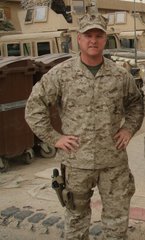
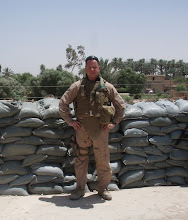
Retirement -- Full Circle


1 March 2008 the day I was retired from the Marine Corps after 25 years. I spent my first 8 years on active duty and the last 17 as a reservist. I have come a long way since I first set foot on Parris Island back in Jan of 1983. I still remember asking myself "What have I done" as a Sgt jumped on the bus I was on and proceeded to scream obscenities at us and to get off his @#$$% bus, Hell I did not know he owned the bus!

In the end, I could not have made a better choice. What the USMC has done for me is immeasurable. I came from a family where I was the first high school graduate and lived a not so privileged life growing up. The free lunch tokens at school and gifts from charities at Christmas time were a constant reminder of my families financial status. After high school I went to work at a factory driving a fork lift for 10+ hours a day. After 7 months I began to question, there has to be more to life than this and looked for a way out. With no money and not great high school grades, college seemed a long shot, so the military looked good. I had uncles who had served in the Army in WWII and Vietnam, as well as my grandfather who was in the Navy during WWII. For me I always wanted to be around planes but the Air Force was not for me. As a young man I found a great way to release my frustrations with life was fighting and I sooner or later found myself in a boxing ring. I did pretty well and went on to win 3 state titles and become a golden glove winner and even had an offer to go pro, so for me the Marines seemed like the place to be. What I have found over the last 25 years is the Marine Corps provided more than a challenge for me, it provided discipline, leadership and taught me how to be a man.

The people who guided me as a young Marine were all Vietnam vets who had seen many things prior to me. The leadership and real world knowledge they passed to me began to build a foundation for things to come. I went on to get a B.S. Degree and eventually followed that up with an M.S. Degree, both completed in night school only with the discipline and tenacity I learned from the Corps. I also grew up in the Corps as a young man of 19 when I joined to 27 years old when I left active duty, the change looking back was dramatic. I left as a Sergeant who had a lot of responsibility working in a Marine Air Wing, something years before I never would have imagined. I got married, started a family and embarked on a new career in the Federal Government as a civil servant. Through out this time I had my base of the Marine Corps as I could not leave it totally and joined the reserves.

So as I walked into the National Museum of the Marine Corps in Quantico VA for my official retirement ceremony I admit I did get choked up....it was over, something that had been a part of me for more than half my life was now ending. This was a very strange and emotional feeling and then to see old friends and family who had come to join me on this day from Japan, California, Florida, Wisconsin and Marines from my current unit made it all that much more special and rewarding. Old friends from Japan and my first active duty posting to my friend and can mate in Fallujah Capt Licari, brought it full circle. Some very kind words were spoken, a flag from my Maryland Congressman, a certificate from the President and Commandant of the Marine Corps and a Medal for my work in Iraq filled the official ceremony. A perfect way to end a great career in a museum filled with some of my own memories made me think about the privilege to serve this great nation we have and the opportunities I have had. The privilege and honor to lead Marines, and grow from a young private to now an old grizzled Chief Warrant Officer 4 made me smile and give thanks for my good luck.

This is now the end of this blog as it has gone full circle from when I started it over a year ago to chronicle my journey to Iraq and my personal observations of war from the front. To my return back and leading up to my retirement. So for anyone who cares let me close a couple of loose ends in this blog.

Those who read about Pearl the IED dog I met and who spent some time with me and Capt Licari in Fallujah will be happy to know she is back in the states. She has no permanent damage from her tour of duty and was adopted by her handler in Iraq and is now living the comfortable life of a family pet.

Capt Licari is back from Iraq as well and now working on Capitol hill as a military advisor to a U.S. Congressman, a long way from our can in Fallujah a year ago. He will also become a father in the near future as his wife is due any day now and has been selected for promotion to Major.

Col Visconage is also back from his tour in Baghdad. I ran into him in Quantico preparing for my retirement while he was checking out. He is now back in Texas and his civilian job.

For me, I now join the list of retired Marines and look forward to the days of telling my stories to my daughters children someday when they ask "You were a Marine?" I can smile and say yes I was and in my heart and mind I will always be.

Monday, September 10, 2007

Guest Blogger, Col Michael Visconage


I have still been in contact with Col Visconage in Baghdad since my return. We have traded email on various topics and I asked him about his latest collection missions and he agreed to be a guest blogger on the below submission.


Supplying the War

On the road last night, and into the morning riding on a Combat
Logistics Patrol (CLP). I rode with 2nd Platoon, 755th Chemical Company
of the Nebraska National Guard. They are part of the 734th
Transportation Battalion, a National Guard Battalion out of South
Dakota.

The Battalion CO is normally a high school history teacher. Earlier in
the tour he was able to link up with three former students assigned to
other Army units in Iraq. The Battalion is a composite organization,
two companies are active duty, and three are National Guard or Army
reserve. They've been converted from a chemical company into a security
company-a part of the ongoing convoy effort that puts 2,000-3,000
vehicles on the road every night in order to provide the logistics
support for the war.

The Company has just suffered a casualty last night in another platoon;
a solider was killed when an IED explosion on the road north hit his
HMMWV. This was the second KIA for the company, as they had suffered
another IED loss a few months ago. Most of the company leadership has
just come from the runway at this airbase for a "ramp ceremony" which
loaded the soldier's body for the trip home. As the company commander,
Captain David Benak, explained, with a National Guard unit most of the
soldiers have known each other for a long time. They live in the same
neighborhoods, a lot of them socialize with each other in their civilian
lives, and many of their kids go to school together. It makes the loss
all the more personal. Few details are know about last night's
explosion, but they details will be provided if there is any
intelligence information to be gathered that will help the others learn
the enemy's latest IED methods.

The 755th is manned by citizen-soldiers. Their array of backgrounds
includes a physical therapist, a student, a grain silo manager, a
hardware store employee, etc. The platoon commander for second platoon
is the local televisions weather man, Chuck McWilliams. A first
lieutenant, he previously served on active duty in the Navy before
getting out and going to college. Second Platoon has 42 soldiers in it.
About half well be on tonight's mission.

I was assigned to the Armored Security Vehicle (ASV) that would be
callsign "Gun 3" for the convoy. The section would escort 30 Third
Country Nationals (TCN) vehicles; tractor-trailers with various unknown
loads. After staging at the Company motor pool, we sat in on the formal
convoy brief for this patrol-the route, immediate action drills,
communications, etc. The soldiers know the brief by heart. Most have
stopped counting the number of CLPs they have been on since they arrived
last October. The number is probably somewhere between 50 and 100.
They also know the routes since there are really only so many ways to go
from point A to point B. More importantly, they know which sections of
each route are the most likely for encountering IED's or small arms
fire.

From there we moved to the TCN vehicle staging point on the other side
of the base, about a ten-minute drive. The gunner, SPC Mohr (the
physical therapist and former active duty USAF airman), let me sit
(stand actually) in the turret for the drive over. It was like the fun
a dog has sticking his head out the car window on a road trip. At the
TCN lot is was another hour waiting our turn for the specific convoy of
vehicles we would be taking. There are many, many trucks lined up, and
many, many convoys heading out tonight, just like any night. It's the
quintessential hurry up and wait situation, only this with a dance of
hundreds of semi trucks interspersed with security vehicles waiting
their turn to be cleared to exit the base on their runs. After the
convoy is linked-up, we stack up along the road inside the gate for the
final go-ahead.

There are two classes of convoys; the first category is made up of those
trucks directly driven by KBR, the main contractor for overland
transport, whose trucks are driven by Americans or other English
speakers. Most of these men (and women) came over lured by the money
but also because they see themselves as part of the war effort. One
50-year-old female driver who goes by "Fred" said she came here four
years ago initially, "to get out of debt." She did that after a year,
but stayed on. Another driver from, Houston, TX, said he had been here
three years. It seems to be more than the money for them at this point;
they see themselves as part of the war effort and they like being around
the soldiers. Some have family in the military. One has a son who had
already served here. One supervisor, the KBR convoy commander (or "C2")
for his group of trucks, told me about his son who wants to go the Naval
Academy.

The other category of vehicles and drivers are the TCN's, a mix of
drivers from any number of different countries (Turkey, Pakistan, India,
Bangladesh, and the Philippines, to name a few). Almost none speak
English, and this makes the escort duty more tenuous if there is an
emergency. They are not as quick to respond to direction or to
understand the drills. Their vehicles are also less protected and may
have not been well-maintained. Having a vehicle stop because on
mechanical breakdown causes and added level of danger. Most of the
TCN's are here for the money they can make. It's more than most will
see in years at a job in their own countries. According to the KBR
drivers, the few that do speak English are often well-educated
professionals, but even they can make more money here than at home.

One of our vehicles gets dropped out of the mix as we headed toward the
exit gate; the driver was having some kind of personal problem
(dizzy/disoriented) and is lagging behind in the convoy. They send him
back to the staging lot. Finally, we're "outside the wire" by about
2230, with two other convoys heading in the same direction.

Early on, SPC Mohr gives me another chance in the turret. The gunner's
job is to constantly scan either side of the road with the night sight
for signs of any unusual activity, while also keeping an eye on the
interval between the truck in front and the truck behind. The ASV
turret is set up for both a .50 caliber machine gun and a Mk 19 40mm
grenade launcher, so there's plenty of fire power if needed. After
about 10-minutes in the turret, it's time to turn it back over to the
real gunner. It's cramped inside. The vehicle is made for four at
most--they usually only need three. The vehicle commander, SGT Haverty,
and the driver, SPC Turnbull, are up front with a least a little view of
the road through the reinforced windows. My seat is in the back since
I'm not mission essential. If you're claustrophobic, this is not the
ride for you. The visibility is limited to a few slits with blast-proof
glass out the sides of the vehicle. I can inch my way around on a few
occasions to try to get a better view of things over the driver's
shoulder, but it's cramped. This probably wouldn't be as bad, but we're
all wearing our personal protective gear (flak jacket, helmet, etc.).
The crews like the ASV, with the exception of the difficulty getting out
in case of explosion or fire. For the larger soldiers, it's almost
impossible to exit from the emergency hatches with your gear on. This
is made worse in the panic of an attack, at night, or a vehicle
roll-over. They do have me hooked up with a headset for the internal
communications system (ICS) so I can listen to their conversation and
the radio communication with the rest of the convoy.

The road varies in width and quality. Some stretches are simple
two-lane country roads, while other sections are 6-lane divided
highways. There's a certain amount of stop and go in the trip as we
come to intersections and check points. There are not a lot of civilian
vehicles on the road at night. Most of the route is semi-rural. There
are homes and occasionally more built-up groups of shops or buildings.
At about 2330 we slow down behind the convoy ahead of us, with another
convoy nose-to-tail behind. The radio chatter starts to pick up and it
becomes apparent that the convoy ahead is taking small arms fire.
Flares go up to the left. We can see the tracers from a friendly
vehicle returning fire into the brush off to the left and right about
100 meters ahead.

We hold our position for at least another 20 minutes and slowly begin
creeping forward. It's confusing, but the engagement seems to have been
brief and inconclusive. We pass a TCN truck on our right from the first
convoy. They hood is up, but it's hard to tell if what the damage is.
Initially there's no sign of the driver, but he soon turns up. The
radio conversation reports that his foot is bleeding and someone from
another convoy will bandage him up and take him to the next aide
station. Even though they are not from our convoy, we take charge of
escorting two TCN trucks that must be towed; they'll be dropped at
another base that is along our route of travel. Traffic starts to roll
and again and we are at the gate for the drop off by about 0030. It
takes almost two hours to get the vehicles dropped off inside the base.
Only the escort vehicle takes the two disabled trucks to a staging area
inside the base. We wait in our vehicles with the convoy. Finally at
0230 we continue on, headed towards our final destination.

The final stretch traces through the edge of Baghdad. Many more
buildings and houses. There are various streetlights and porch lights
that provide some illumination of the area. Finally, we're at the gate.
Weapons are cleared and electronic counter-measures are turned off.
It's 0345. The TCN trucks route into a separate area to be screened
one-by-one for contraband or explosive devices before they actually on
base. They will eventually be routed to their final destination on base
by other elements. The platoon won't be able to return tonight-not
enough hours of darkness remain. They'll bed down in transient quarters
and try to get some sleep before picking up another convoy tonight for
the run back home.

In October they'll pack up and head home to Nebraska. Some back to
jobs, other to school, a few will volunteer to come back with other
units. Most have remained motivated about their mission here, but are
concerned about the frequency of future mobilizations and the impact
that has on their civilian plans and professions. Maybe half will stay
in the National Guard when their commitments are up.

Monday, September 3, 2007

Iraq and Back


Sitting in the darkness of my living room before dawn I gaze out at my backyard and drink my coffee. Sitting in my favorite chair I let my mind wonder. The house is still with everyone still asleep as I look out into the darkness my mind travels back over this past summer. I can see the helo's and hear the sounds of the convoy and artillery fire in my mind. I close my eyes and think about the whole experience, the memories are still very fresh. I can feel the heat and the weight of my flak jacket and the snug grip of my pistol strapped to my right leg. I think about my first time leaving the "Wire" and my heart racing, rifle and pistol at the ready, the anxiety and rush of adrenaline mixed with a very real and strong sense of fear. I remember being in Ramadi when a suicide vehicle exploded very near where I was and can feel the concussion and hear the load roar. I listen to the news and hear names like Fallujah, Ramadi, Baghdad and I know those places and see them in my mind. I sit in the quiet of my home as sunlight breaks over the tree line and I smile quietly to myself. I did what I felt I needed to do and I am proud of my actions and happy to be home safely.

Now I am stateside and have checked back into the History Division at Quantico, turned in all of my interviews and photos. I have gone back to supply and turned in my pack, kevlar and flak jacket and all the associated equipment for life in Iraq. I noticed the dark stains on my flak jacket when I turned it in, my sweat from riding in Helo's, convoys and walking out with Marines in Iraq, a small piece of me forever on that flak. I have also left my dog tag in my left boot as a reminder of where I have been and for me to take note for those who still serve.

Sitting in the darkness I think about being home now for 3 weeks and what life is like. The thoughts I now have and the perspective of my time in Iraq. A few things have changed for me I think, at least my view of life in general I think has changed. I had a LtCol tell me in Ramadi that "Iraq will make or break a Man". I also had a Maj tell me you will find "The mark of a man while in combat". I have found that I view things now in a much broader sense and do not get so excited or worked up. I keep the perspective on how life can change in the blink of an eye. I take note of the small things, I sit here in the early morning and hear birds, no artillery fire, helos, rockets or machine gun fire. I went to church last weekend and was struck by the calmness of everything. In Fallujah during Mass it seemed the artillery would always start, giving a surreal feeling with rounds going downrange right outside the door of a house of worship.

I know I will never look at an American flag the same way again, after seeing one draped over a transfer case in Iraq sending a service member home for the final time. Knowing personally the sacrifice being made while serving under that flag has made me look at it much differently. I have gone to war under that Flag and my colors and I have seen the dead sent home draped with it. I have to wonder do we realize how lucky we are to live here?

Very soon I will detach from active duty and go back into the reserves and then begin the paperwork for my retirement. There is now not much more I can tell anyone reading this blog. I have striven to give anyone who wanted to know a personal view of one man's journey to war and back, the stories of those I have collected along the way and my personal thoughts. I hope my journey has shown you a world you were not familiar with or a side of a man who felt he had to do his part.

Thursday, August 16, 2007

Return

Glancing out the window of the Lufthansa flight I was taken aback by all the green I saw, after months in the desert everything seemed so alive with color from my view headed into Dulles Airport. I sat back and thought about my whole experience and how in an hour or so I would be joining my family again and heading north back to Maryland.

The moments leading up to this were still fresh in my mind of helo and C-130 flights to get me out of Iraq to Kuwait and to the big staging camp of "Liberty" at Ali Al Salem air base in Kuwait. I would be here a few days before putting on civilian clothes and boarding a commercial flight back to the U.S.A.

I turned in my weapon and ammo in Kuwait and felt odd, for so many months I always had a pistol with me wherever I went, no flack jacket or helmet here either. I walk around thinking I am missing something as all of those things were such a part of everyday life in Iraq. I noticed a lot of the other services walk around this base in PT (Physical Training) gear consisting of shorts and a tee shirt, The Marines always wear their uniform making them easy to spot in the crowds. This whole place seems odd to me, it is a large area of approx 200 12 to 16 man tents, this is a transit area for people heading into Iraq and Afghanistan as well as those headed back to the states. You will see the inhabitants of the tents change literally on an hourly basis. There is a McDonald's, KFC and Pizza Hut with folks always lined up at them...maybe I am just an old guy but I continued to eat at the Govt facility.

At the designated time I change into my civilian clothes and make my way with pack on my back to the manifesting area for the bus to Kuwait International Airport. I notice my clothes are very loose, I would guess I lost about 10 to 15 pounds in the months I spent in Iraq, One more reminder of where I have been. We ride out into the night and I gaze at the desert landscape of Kuwait and have trouble thinking this is all ending soon, I see signs of western civilization, neon lights, cars on the freeway and into the hustle and mass of people at the airport, my mind trying to grasp the changes...36 hours ago I was in Fallujah...now I am in civilian clothes and heading to commercial airplane. A quick stop in Germany and now back to my seat on final approach to Dulles airport in Virginia. I think back to when I used to ask in my interviews for people to describe their Iraq and combat experience, I now struggle to answer that question myself as I know I will be asked.

The journey reaches its high point when I exit the international arrivals and see the big smile of my daughter..... I am home

Sunday, August 5, 2007

Are you Ready?


Are you ready? That’s the question I have asked myself over and over. From the moment I accepted to go on this deployment, to my first night in Kuwait when I could not sleep and spent the long night staring at the ceiling of the tent. To each day waking up here in Iraq… are you ready for what may come today? I have traveled all throughout the Al Anbar Province and the Marine Corps area of operations. I have experienced a wide range of emotions from cursing at the current situation with words I was even surprised came out of my mouth, to swallowing hard and pushing on… Are you ready?

In my travels as a historian I have had the opportunity to talk with hundreds of Marines and have seen things I will never forget. Doing an interview is mostly a one on one meeting between me and a fellow Marine, behind a closed door on most occasions. I have seen hard as nails combat veterans break down and cry when telling me about the loss of a fellow Marine or seeing a child killed; I am most likely the first Marine who has asked them to tell me their story, sometimes making them relive horrible memories. I have heard stories of incredible bravery and of self sacrifice to “Duty, Honor and Country” words that for some are not a cliché, but truly have meaning. Those moments are burned into my memory….Are you ready? I have tasted my own fear being outside the wire and riding in a convoy with weapons loaded and at the ready, the mental preparation for that is something to experience…Am I ready to do what may need to be done?…Is there an IED in the road? Will we take fire? Is there a sniper out to kill us? If it does happen what will they tell my daughter about her father?… Am I ready?

In my job as the historian the stories and pictures I have captured for future generations of Americans so that we will not forget what has happened here will remain with me. I have them all in my head, each interview, the words, the faces; I have images in my memory that will be life long. Am I the same man who left Maryland months ago? I have continued to push on and keep focused, I have found strength here that I had long ago forgotten about: “Remember your roots Mike, you are a Marine I tell myself”, the time is here and now. I will always remember my days as the “Gunner” here in Iraq. There are few things in my life that have made me prouder than what I do today. I will hold firmly onto the memories of the times my uniform said it all SEARS……U.S. MARINES…Was I ready?

There will be a day shortly when I will no longer be the Gunner. I will put my pack down for the final time and walk off into retirement. A quarter of a century from when I first showed up at the gates of Parris Island not sure what I got myself into. But I will leave with the knowledge and pride that I have served with the finest America has produced. My Corps is in great hands with the Marines I have had the privilege and honor to serve with here in Iraq, This is the Corps’ future leaders, and they are ready.

In a few days this journey will start to move towards its conclusion, I will board a plane bound for Kuwait and ultimately the United States and leave Iraq behind me or will I always carry part of iraq with me I wonder? The full realization of where I have been and what I have experienced is starting to set in, it seems like April when I left Maryland was a lifetime ago. .. Are they ready for me back home?

Thursday, August 2, 2007

Baghdad


I am jolted by the Soldier walking past me who snaps a salute and says “Good Morning Sir” I wonder what the hell is he doing? I have been in Iraq since May and we Marines do not salute in a combat zone. I am seconds away from asking him ‘Do you know where the hell we are” I salute him back and think where the hell am I? A salute out here is recognition of who the officers are, a great target for snipers or anyone else trying to find out who the leaders are... things are different here at Camp Liberty in Baghdad I learn.

I feel like I have stumbled back into civilization on this sprawling base full of Army, Navy, Air Force and yes a few Marines. There are also coalition forces from Poland, Australia, the UK, Korea just to name a few. There is fast food, a large stateside size exchange; I see lots of SUV’s and other cars and lots of civilian contractors. I begin to realize where I have been these past months and it starts to sink in.

I am in Baghdad to have a meeting with my boss, Col Michael Visconage about my time here in Iraq and to pass copies of my collection efforts with the Marines out in the Al Anbar province to him at the Joint Historical Office. I get the unique experience of seeing the higher headquarters of MNC-I the place where Gen Petraeus commands from, the Al Faw palace. The Al Faw palace of Saddam Hussein is now the command headquarters, the coalition has taken over this place and it is now the nerve center for conducting this war.

I have to take the obligatory tourist pictures of the palace, and I think how drastically different my life and experience has been out west with the Marines. I have a good day with the Colonel and he actually turns the tables on me and interviews me…. Strange being on the other side after so many months of being the one asking the questions.

I continue saluting all day and walk in a haze as I feel so out of place here. My boots are covered in the lunar dust that is all outside the wire, my uniform is a bit dirty and sweaty and lived in compared to the staff of the Al Faw, I feel relieved to be back in my flack jacket, helmet on and walking in the darkness that evening to the Marine CH-46 that will take me back to Fallujah... Back where I belong.

Pics of the post, me sitting in Saddam’s former throne in the Al-Faw, a gift to him from Yassar Arafat formally of the PLO.

The other is of me outside the Palace to give you an idea how large it is.

Sunday, July 29, 2007

The Future


The old man shook my hand and said follow him, he was dressed in an old green camouflage uniform with the markings of the 2nd Brigade of the 1st Division (2/1) of the Iraqi Army; he seemed old enough to be my father, which given my age is saying something. We walked back outside into the oven that has now become Iraq in late July, the temp at 2:00 this afternoon is 121, we move to another building to the desk of a Marine Corps Sergeant. I tell him who I am and that I am looking for the Marine Corps Military Transition Team (MTT) Commander for 2/1, LtCol Fisher, “Follow me Sir” back to the oven and to another building, I am stuck by how young the Sergeant is compared to the Iraqi soldier who lead me to his desk, I wonder where do I fit in that equation?

I arrive at the office of LtCol Fisher, the head of the Marine Corps MTT attached to the Iraqi 2nd Brigade of the 1st Division; he has the unique challenge to help build the 2/1 of Iraqi Army into a force that can provide stability and security to their nation. A very difficult task given the best of circumstances. We discuss the problems encountered in his position, the troubles with the central government in Baghdad, the cultural differences and the interaction of his team of Marines and the Iraqi soldiers and how things are getting done. He is the right man for the job having been a military advisor for many years working with other countries military and training them to be more effective. The Corps has got the right man in place here with 2/1.

The LtCol’s job is critical to the future of Iraq and the eventual withdrawal of American troops. The Marines also have a unit called the Police Transition Teams (PTT) that work with the Iraqi police to get them up and running so they can assume a greater role in the stabilization and security of this war torn country. The Army and the police are the future of Iraq, and the Marines are working hand in hand with them to rebuild their country.

I also spent time this week with the director for the Iraqi Security Forces (ISF), the office that oversees the MTT and PTT, a Marine Colonel who walked me through the ongoing actions of the MTT and PTT and what progress has been made. The situation has turned now to one of capacity, so many young Iraqi men are volunteering for the Police and Army forces it is now a problem of how to train them all and how quickly they can be integrated into the forces, a sure sign of improvements and success here.

The war is taking many turns now and it is not all trigger pulling that will be the end state of our engagement here, stabilization and rebuilding will be the measure at which we will depart I think.

There are dedicated teams such as the Provisional Reconstruction Team (PRT) joined with the Marines of the MTT and PTT that in my opinion will be the driving force for the war to come to some kind of closure. But make no mistake we are far from finished tracking down and killing Al Qaeda, and missions go on and people die daily. But we are also working on the future stabilization and security for the people of Iraq, and progress is being made out here in the western province.

I was able to attend a planning meeting for a future operation to be conducted by the Iraqi Police, Iraqi Army and the Marines. To watch all three working in unison with mutual respect and trust was interesting to watch, three different organizations but with a common goal and focus, kill Al Qaeda and return the cities to some sort normalcy with security and the inhabitants not living in fear. As I have been reporting for months now the changes happening here in Al Anbar and the spreading of the “Awakening” movement are sure signs of progress being made, I see it with my own eyes.

Pictures for this post: The first is of the senior members of the Marine MTT and of 2/1 to include BGen Ali Gaza (Third from left) and LtCol Fisher the MTT Commander (4th from left) from the 2nd Brigade of the 1st Division of the Iraqi Army.

The second is of BGen Ali Gaza and Col Faisel the Chief of the Fallujah Police discussing details of a future operation.